After Nearly a Century, an Oregon Marsh Is Reconnecting With the Tide
A nine-acre restoration project will reopen McCoy Marsh to the Nehalem River, rebuilding tidal channels and a nursery for young salmon.

A nine-acre restoration project will reopen McCoy Marsh to the Nehalem River, rebuilding tidal channels and a nursery for young salmon.
On the northern Oregon Coast, heavy equipment is making way for the tide.
Restoration crews have begun work at McCoy Marsh, a nine-acre wetland north of the city of Wheeler that has been separated from natural tidal flow for nearly a century. By the end of September, the project is expected to reconnect the marsh to the Nehalem River—and to the 35-acre Botts Marsh immediately to the south.
The intervention sounds small beside the scale of an entire watershed. Its design can be measured in three openings through old dikes and 1,465 feet of new tidal channel.
But the result will be something larger: room for water to move naturally again.
What went right
The Lower Nehalem Community Trust owns and stewards both McCoy and Botts marshes. With community volunteers and a network of conservation partners, it spent years moving McCoy Marsh from an idea through planning, engineering, permitting and funding to construction.
The work now underway will breach the perimeter dikes in three places. Crews will excavate winding channels, place large pieces of natural wood in the waterways and across the marsh, and build soil mounds for a mix of scrub-shrub and Sitka spruce swamp vegetation.
Those details matter. A functioning wetland is not simply an area with water in it. Its channels, changes in elevation, vegetation and woody structure create different places to feed, hide, rest and grow.
The project also restores a connection that earlier development interrupted. Construction of the Oregon Coast Highway along the property’s northeastern edge cut off tidal influence, and another perimeter dike was built in the early to mid-1900s in an effort to drain the land for grazing.
Nearly a century later, people are choosing to reverse part of that separation.
Why nine acres matter
Estuaries are transition zones, where rivers meet the sea and freshwater mixes with saltwater. NOAA calls them some of the most productive ecosystems on Earth. They support clean water, wildlife, fisheries and natural protection from flooding and erosion.
For young salmon, they are also nurseries.
Juvenile Chinook and Coho moving down the Nehalem River must adjust from freshwater to life in the ocean. Slow tidal channels and marsh habitat give them food, shelter and time to grow before entering open water.
McCoy Marsh sits at an especially useful point in that journey. The Lower Nehalem Community Trust says the restored wetland will offer young salmon their first refuge as they reach the open bay. Reconnecting it to Botts Marsh turns a previously isolated parcel into part of a larger habitat network.
The two wetlands also support more than 125 bird species. What helps a young salmon at water level can help shorebirds, waterfowl, plants and other wildlife across the estuary.
That is how nine acres begin to matter beyond their boundaries: not as an isolated patch, but as a missing piece returned to a living system.
Many hands, then the tide
The project’s technical team includes the Wild Salmon Center, Oregon Department of Fish and Wildlife, Tillamook Estuaries Partnership and Nehalem Bay Watershed Council. Support comes from the Oregon Watershed Enhancement Board and Wild Salmon Center, with funding from NOAA and the National Fish and Wildlife Foundation. Community volunteers help steward the land.
No single organization could simply decide to move a dike and begin digging. The visible construction is the last stage of years of less visible coordination.
Once those openings and channels are in place, the relationship changes. People will have created the conditions, but the tide will do much of the daily work—flowing in and out, carrying nutrients and sediment, and reshaping the wetland over time.
What still has to go right
This is a project in progress, not a finished success being declared early. Construction is scheduled to continue through September 30. Revegetation, volunteer planting days and monitoring will continue for years.
The new channels will need to function as designed. Native plant communities will need time to establish. The Trust and its partners will watch how fish and wildlife use the restored habitat and adjust stewardship as the marsh changes.
That patience is part of what went right. McCoy Marsh was disconnected gradually by decisions made generations ago. Its repair also required people willing to think beyond one season.
They did not manufacture a new ecosystem from nothing. They reopened a path and invited a natural process back in.
After nearly a century, the tide gets another turn.
Sources and further reading
- McCoy Marsh Tidal Reconnection Project, Lower Nehalem Community Trust
- “After Nearly a Century, Tidal Waters Will Return to 9 Acres of Nehalem Estuary Wetland,” Tillamook County Pioneer
- “Estuary Habitat,” NOAA Fisheries
- Oregon Watershed Enhancement Board 2026 grant awards
This article is an independent synthesis based on the sources above.
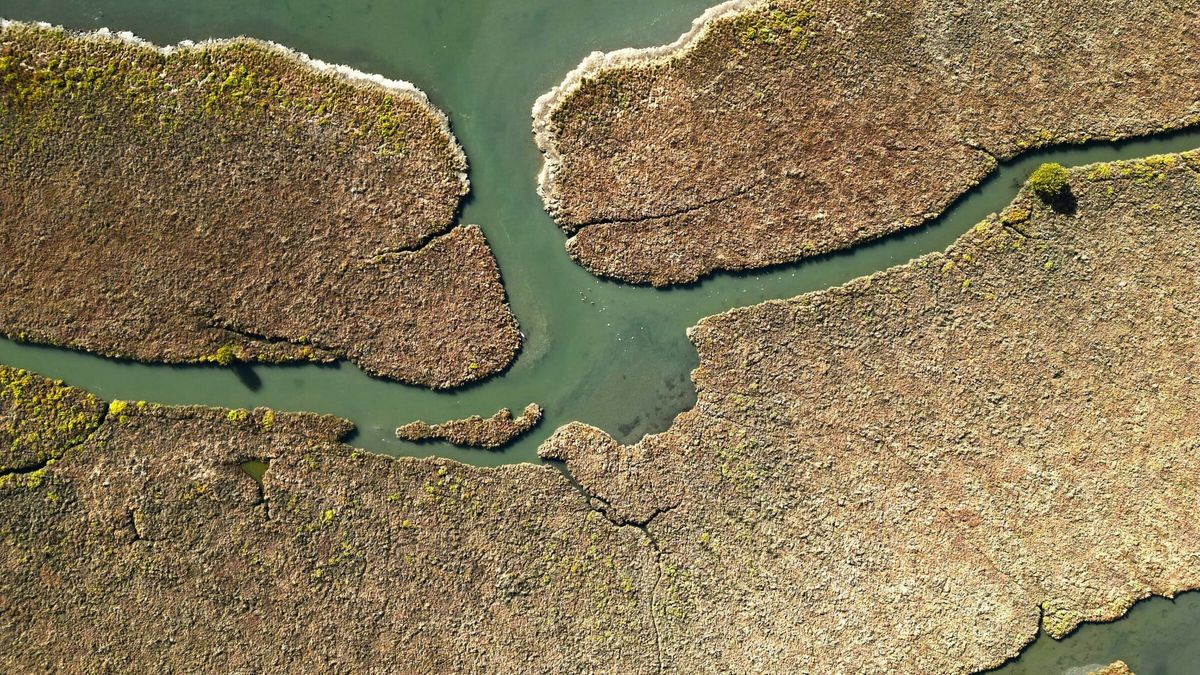
Representative feature image: an aerial view of tidal-marsh channels. Photo by Iain on Unsplash, used under the Unsplash License. The image does not depict McCoy Marsh.